Lettre n° 158 – JUIN 2026

Quoi de neuf au Ladyss

Université d’été 2026 – Sentir, penser, agir dans la polyphonie du vivant Apprendre ensemble et nourrir nos envies d’agir

12-18 juillet 2026, Moulin des Baronnies, Sarlabous

Vie du laboratoire

Soutenance de thèse


Tess Heydorff-Decaux, doctorante sous la direction de Céline Clauzel, professeure de géographie, UMR CNRS 7533 LADYSS – Université Paris 1, soutiendra sa thèse intitulée “Réseaux ferroviaires et continuités écologiques, entre conflits et opportunités de franchissement. Analyse des collisions et de l’utilisation des ouvrages d’art non dédiés par les ongulés sauvages “, mardi 10 juillet 2026 à 13h30 au Centre Sorbonne, 1 rue Victor Cousin, 75005 Paris et à distance.
 

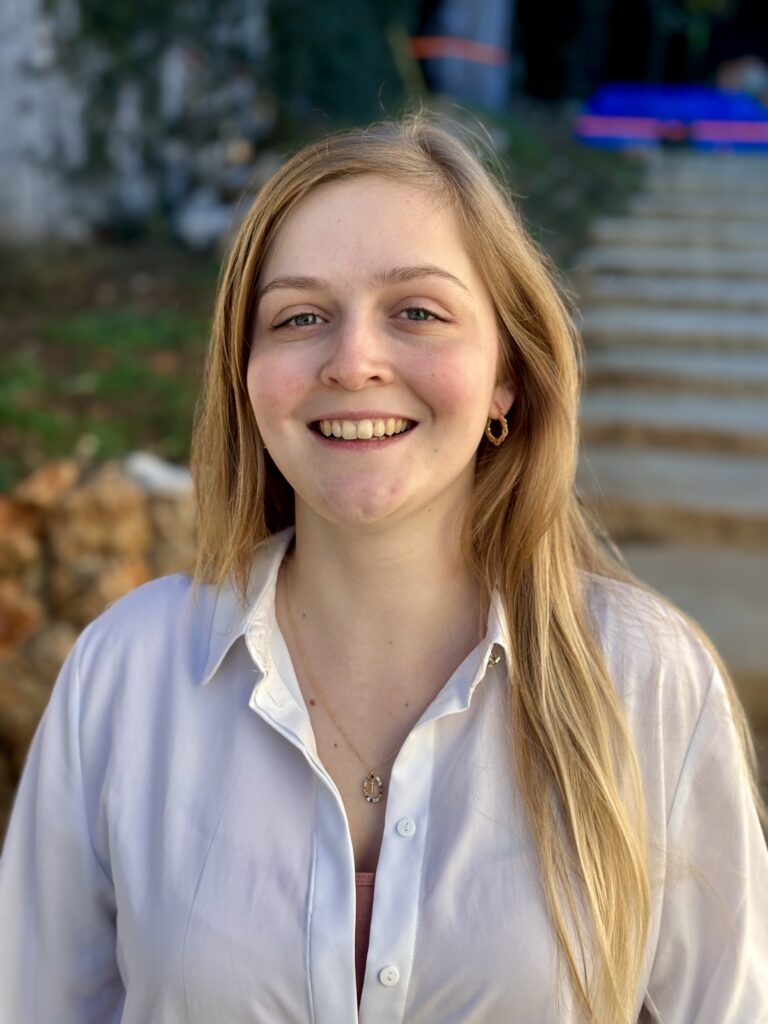
Portrait de Wini Mudawi Ibrahim Adam, doctorante en première année d'économie sous la direction de Nathalie Berta, à l'université UP Cité

1) What is your academic background ?

My academic background integrates engineering, water and sanitation science, and social sciences, with a strong focus on applied research in low‑income and displacement‑affected contexts. I hold a Bachelor of Engineering in Mechanical Engineering from the University of Khartoum, where my undergraduate research addressed performance optimization of conventional water clarifiers. I later completed a Graduate Diploma in Science and Engineering at Kaplan International College, London.

I obtained an MSc in Urban Water and Sanitation from UNESCO‑IHE (IHE Delft) through the Netherlands Fellowship Program. My master’s research evaluated the sustainability of productive sanitation systems in IDP camps in South Darfur, including field piloting of urine‑diverting toilets and faecal sludge characterization, and received the Max Havelaar Lecture Award.

My academic training is complemented by extensive practical experience in water and sanitation and hygiene (WASH), fecal sludge management, and decentralized biogas systems across Sudan, Kenya, and Uganda, involving system design, field piloting, and implementation in informal settlements and refugee contexts. I am currently a PhD candidate at Université Paris Cité (ED 624 – Social Sciences and Humanities), conducting interdisciplinary research on sustainable sanitation and biogas systems in East Africa, with additional admission to the IHE Delft / TU Delft PhD program, reflecting the technical and socio‑economic orientation of my work.


2) What research themes are you working on ?

My research focuses on sustainable sanitation and decentralized biogas systems in low‑income, high‑density urban settlements: informal and refugee contexts, examined through a socio‑technical and Science and Technology Studies (STS) lens. A central theme is the persistent underperformance of biogas systems despite large-scale deployment, driven by low-rate digester designs, mono-substrate operation, weak process control, and exclusionary governance models.

Technically, I study anaerobic co‑digestion, high‑rate reactor configurations (UASB, ABR), methane yield optimization, pathogen inactivation, and greenhouse‑gas mitigation using GWP₂₀ and GWP₁₀₀ frameworks. Socially, my work examines gender, cooperative management, particularly how women and marginalized groups bear sanitation and energy burdens while being excluded from decision‑making and ownership.

Additional themes include climate resilience, carbon finance for sanitation, community‑led cooperative models, and policy barriers to innovation, informed by comparative insights from French micro‑methanation. Overall, my research integrates engineering, public health, climate mitigation, and social justice to understand how sanitation infrastructure can transition from underperforming technologies to inclusive, climate-relevant systems.


3) What projects are you currently working on?

The project focuses on piloting and scaling sanitation‑linked biogas systems in displacement‑affected settings to address sanitation, energy access, and environmental health challenges. It integrates fecal sludge management and organic waste valorization within decentralized biogas systems adapted to refugee and host‑community contexts. Emphasis is placed on applied research, technical piloting, and knowledge transfer through engagement with local stakeholders, humanitarian agencies, and service providers. The project functions as a living laboratory to assess technical performance, governance arrangements, and operational sustainability, while generating transferable lessons for similar low‑income and fragile settings. By combining engineering practice with socio‑technical analysis, the project contributes evidence‑based pathways for circular, resilient sanitation and energy solutions in fragile environments.

Additionally, I serve as a peer reviewer for the Journal of Water, Sanitation and Hygiene for Development (WASHDEV) and continue to publish and present research on sanitation, and biogas performance.


4) What do you hope to contribute through your research?

Through my research, I aim to contribute actionable, interdisciplinary knowledge that reshapes how sanitation‑linked micro methanation systems are designed, governed, and valued in marginalized settings. Technically, I seek to demonstrate that compact, high-rate co-digestion systems can substantially improve methane recovery, reduce reactor size and costs, enhance pathogen removal, and deliver meaningful climate and health benefits compared to conventional low-rate digesters.

Equally important, my contribution is conceptual and social. I aim to show the technology alone cannot deliver sustainable sanitation without addressing governance, gender, and power relations. By foregrounding women‑led cooperative models and community ownership, my research challenges extractive, top‑down infrastructure approaches and proposes inclusive alternatives to improve safety, and economic participation.

At a policy level, I seek to bridge gaps in climate finance and technological innovation, demonstrating how carbon markets and substrate diversification can improve micro-methanation systems. Ultimately, my goal is to contribute to climate-resilient, just, and context-responsive sanitation transitions that are relevant to communities in France and the Global South.


Lumière sur le projet INNOVART


Retrouvez sur la chaîne Canal U du LADYSS un court documentaire qui reprend les étapes clés du projet INNOVART.


Le projet Innovation de la recherche en art à l’université, construit par Marie Bardet et Silvia Dolinko de l’UNSAM, Andrea Sosa de l’UNLP et Joanne Clavel du LADYSS dans le cadre du programme d’échange franco-argentin INNOV’Art, a interrogé deux axes de recherche à partir de la question commune du corps. D’une part, la question écologique pensée à partir des gestes ; d’autre part, l’arrivée de l’intelligence artificielle dans le monde de l’art.

Les pratiques « écosomatiques » mobilisent des perspectives écologiques pour repenser de manière transversale nos pratiques artistiques et somatiques, les enjeux sociaux du sensible et les défis liés à la perte des communs. Ainsi, depuis le Nord comme le Sud, à l’occasion de plusieurs séminaires, ateliers, masterclasses et conférences, nous avons interrogé les pratiques de recherches, les pratiques artistiques et les pratiques du mouvement en pensant la crise socio-environnementale et les processus d’émancipation au plus près des gestes.

Le second volet explore l’arrivée massive de l’intelligence artificielle dans le monde de l’art, comme dans celui de la recherche. Les possibilités de la photographie en tant que langage et de l’intelligence artificielle (IA) en tant qu’outil contemporain orienté vers la création artistique ont été interrogées lors d’ateliers, de formations de master et de conférences. Il s’agissait de promouvoir les compétences interculturelles dans les milieux éducatifs et d’analyser les similitudes et les différences entre les cultures argentine et française quant à la manière dont la jeunesse imagine le monde de demain.


 

Dernières publications du Ladyss

Autres productions

Podcast

Sarah Bortolamiol dans Un café avec Sarah Bortolamiol (5/6) – Un café autour du prendre soin de nos territoires, Fédération des Parcs naturels régionaux de France, 00:09:06, [s.l.] : Spotify, 9 juin 2026. URL : https://open.spotify.com/show/033vfL0fxFP5ctG064vgkI.


Thèse en ligne

Deneffe Dobrzynski Marie-Laure, Émotions de rébellion et résistances à bas bruit chez les sages-femmes et les femmes-patientes, Thèse de doctorat en science de l’éducation, Université Paris 8 – Vincennes-Saint-Denis, Saint-Denis, France, 19 novembre 2025. URL : https://hal.science/tel-05401459.


Publications

Ouvrage à la une

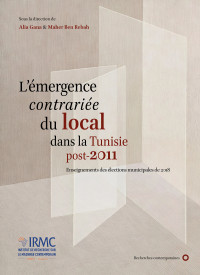
Gana AliaBen Rebah Maher (dir.), 2026, L’émergence contrariée du local dans la Tunisie post-2011. Enseignements des élections municipales de 2018, Tunis, IRMC, 290 p., en ligne : https://books.openedition.org/irmc/5260



Babou Igor, « Démocratie environnementale », Publictionnaire. Dictionnaire encyclopédique et critique des publics, 24 avril 2026. URL : https://shs.hal.science/halshs-05633516.


Butin Soline, Granieri Clara et Marsaud Alexandre, « Savoirs environnementaux, inaction et potentialités transformatrices des SHS: enseignements de l’école socio-environnementale (ELSE) », Carnets de géographes, vol. 20, 2026. URL : https://hal.science/hal-05600453.


Maalouf Rita, « Le numérique est global, peut-il être régional ? Interroger la convergence numérique nord-sud en méditerranée », Terminal. Technologie de l’information, culture & société, no 142, juin 2026, Creis-Terminal. URL : https://journals.openedition.org/terminal/12307.


Poiret Andréa et Pech Pierre, « An integrated approach used to set up the management structure of an urban natural space: the vidal-mondélice peri-urban natural space in French Guiana, france », Human Settlements and Sustainability, vol. 2, no 2, 2026, p. 134. URL : https://hal.science/hal-05652022.



Figuière Catherine et Métereau Renaud, « Environnement et développement. Le demi-siècle perdu ou comment le rapport brundtland a effacé l’éco-développement », in Monsaingeon Baptiste, Villalba Bruno et Vivien Franck-Dominique (dir.), No(s) limit(es). Étudier et enseigner face aux limites planétaires, [s.l.] : La Découverte, 2026 (Grands repères. Manuel), p. 228‑238. URL : https://hal.science/hal-05649686.


Retrouvez nous sur Scoop.it

Directrice de publication : Anne-Peggy Hellequin
Coordinatrice de rédaction : Myriam Djedi
Rédactrices : Myriam Djedi et Bénédicte MacGregor